
IP: Paloma de la Peña
Public institution linked to the project: University of Granada
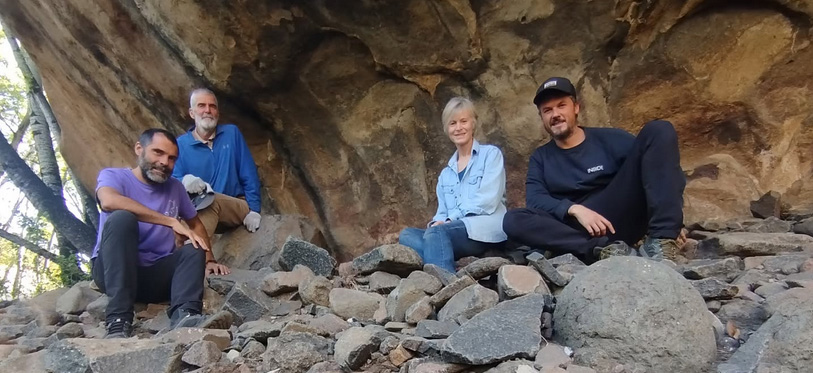
The Marshill Rock Shelter project seeks to unravel one of the most fascinating stories in southern Africa: the relationship between prehistoric and historic human communities and the artistic expressions they left engraved and painted on rock.
Located in the foothills of the Maloti-Drakensberg Mountains in the Stormberg region (Eastern Cape Province, South Africa), the Marshill site preserves a long sequence of human occupations spanning from the Middle Stone Age (about 300,000 years ago) to the colonial era of the 19th century. This exceptional record makes the site a key piece in understanding how hunter-gatherer groups, herders and farmers used the mountain landscape and how they represented their world through rock art.
Project objective
The main purpose is to document and analyse the rock art motifs at Marshill, establishing a direct connection between these artistic expressions and the material evidence recovered in archaeological excavations. The aim is to understand how rock art relates to the different human occupations of the site and how it reflects cultural, social and environmental changes over time.
Methodology
The team uses a combination of state-of-the-art archaeometric and digital techniques to record every detail of the decorated panels:
- 3D laser scanning to generate accurate three-dimensional models of the site.
- High-resolution photography and photogrammetry to capture both the overall composition of the murals and the finest details.
- Taphonomic and sequential analyses to study the overlapping of motifs and the processes of rock alteration.
These tools make it possible to create digital replicas of the rock shelter without altering its environment, ensuring the conservation of heritage and opening up new avenues for analysis and dissemination.
The study area is part of the Afro-Alpine biome of southern Africa, characterised by its cold, dry climate and mountain grassland landscape. Over thousands of years, this environment was the scene of multiple strategies of occupation and seasonal mobility, reflected in the caves and shelters where communities left their art.
The project aims to integrate the Marshill data into a broader view of landscape use in the Drakensberg foothills, comparing it with other key sites in Lesotho and eastern South Africa.
The research is being conducted in collaboration with the Evolutionary Studies Institute (University of the Witwatersrand) and the Anderson Museum in Dordrecht, with a strong community outreach component. During the campaigns, the team organises talks in museums, schools and rural communities in Barkly East, Dordrecht and Rossouw, sharing the results and promoting appreciation of local cultural heritage.
Over the next three years, the project will continue with intensive documentation campaigns, with the goal of definitively linking rock art with excavated material culture. This correlation will allow for a better understanding of the cultural and symbolic processes that united the communities of the past with the landscape they inhabited.
Marshill’s rock art, ranging from prehistoric polychrome paintings to recent colonial motifs, forms a visual bridge between thousands of years of history and the landscapes we continue to inhabit today.